All posts (Page 128 of 130)
At rOpenSci’s virtual HQ we’re busy planning out several exciting projects for the coming year thanks to the generous 180k grant from Sloan. In the interest of maintaining transparency with our community here are additional details of what we hope to accomplish and how we’ll measure our successes. We have also posted a full copy of our proposal over at figshare.
🔗
Objectives for the year
a) Focus on identifying shortcomings, strengthening our core products, and working to link existing tools through interoperable data structures and visualization routines. To facilitate this process, we will convene two hackathons, one with the core development team and advisors and a second with a wider group of rOpenSci collaborators.
...Today we are pleased to announce that rOpenSci has been awarded a generous 180K grant from the Alfred P. Sloan foundation. This funding will allow us to develop a whole new suite of tools and provide scientists with general purpose toolkits to access various kinds of scientific data. We will also be traveling a whole bunch this year and running workshops at several conferences and universities. If you’d like us to speak to your research group, please get in touch. We’ll be at several events over the coming months including The Ecological Society of America annual meeting, The Open knowledge conference, Science Online Climate, American Geophysical Union and several others. Stay tuned for announcements on Twitter, our blog (rss) and new mailing list....
The USGS recently released a way to search for and get species occurrence records for the USA. The service is called BISON (Biodiversity Information Serving Our Nation). The service has a web interface for human interaction in a browser, and two APIs (application programming interface) to allow machines to interact with their database. One of the APIs allows you to search and retrieve data, and the other gives back maps as either a heatmap or a species occurrence map. The latter is more appropriate for working in a browser, so I’ll leave that to the web app folks....
🔗
We’ve been busy
We have been busy hacking away at code and our website. Here is an update on what we’ve been up to.
🔗
Packages
-
rplos/alm PLoS provides two different API services: the Search API and ALM API. As their names suggest, the search API lets you search and get text from their papers and associated metadata. The ALM API allows you to get article level metrics data on PLoS papers. Up until a few weeks ago, both APIs were accessible via functions inside the rplos package, but they really served two different purposes. Thus, we decided to make two packages: rplos, which wraps just the Search API, and alm, which wraps just the ALM API. It especially made sense to break off the ALM API into its own package as other publishers can use the ALM API for delivering their own article level metrics given that the PLoS ALM code is open source. Thus, down the road, you should be able to get altmetrics from XYZ publisher using the alm package just by changing the base URL (a.k.a. the API endpoint).
...
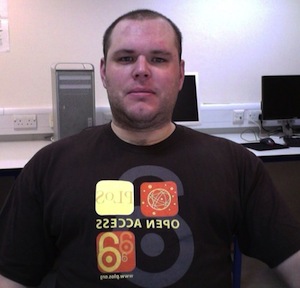
A guest blog post by Steve Moss
Why Python? A little background!
I started using Python in the summer of 2010. I had applied for the Master of Research postgraduate degree in Computational Biology at the University of York. They teach the programming portion of their course using Python. I thought it might be useful to learn it, before starting, to give me a bit of a head start.
...